BENEFITS OF BENTONITE IN VARIOUS INDUSTRIES
AGRICULTURE, FARMING AND VITICULTURE

Bentonite is used on more sandy and easily permeable soils.
Due to its high absorption capacity, it can retain soluble nutrients in the soil that would otherwise be lost by leaching. The nutrients thus remain in the soil and are available to the plants for a long time. The organisms living in the soil find good conditions for development in the bentonite mineral structure. Thus, the soil is significantly improved and the yield is increased naturally.
Due to its properties, it is also used to eliminate heavy metals, toxins, and other hazardous substances from the air, plants, organism, and soil.
Bentonite can absorb relatively large amounts of protein molecules from aqueous solutions, so bentonite is uniquely used in the wine production process as it has the ability to remove excessive amounts of protein from white wines.
VETERINARY AND LIVESTOCK BREEDING
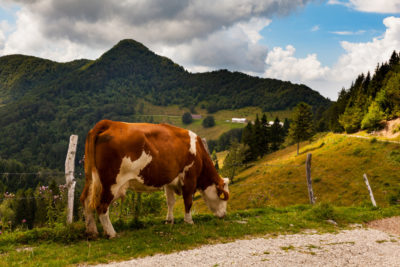 The mineral of bentonite, montmorillonite, is used in veterinary medicine to treat the intestines of animals and to prevent aflatoxicosis. Modified montmorillonite inhibits the absorption of cholesterol in the intestine and absorbs uric acid. In animal husbandry and aquaculture it is used to improve the growth of pigs and fishes, reduces the secretion of thyroid hormones, and eliminates parasites. It is proven to be an effective absorption agent for heavy metals, toxins, and dangerous chemicals. It stabilizes acidity in the body, participates in tissue engineering, and has an antibacterial effect.
SOIL DECONTAMINATION
Bentonite is a type of expandable montmorillonite clay, and has strong sorption for heavy metals. Soils near busy roads or highways are contaminated with various metals, pollutants, and toxic chemicals: benzene, toluene, and xylene, which are carcinogenic. Bentonite clay reduces pollution by changing its chemical composition.
Results of using bentonite in clay technology by farmers have returned greater economic outcomes, with higher yields and higher output prices.
COSMETICS
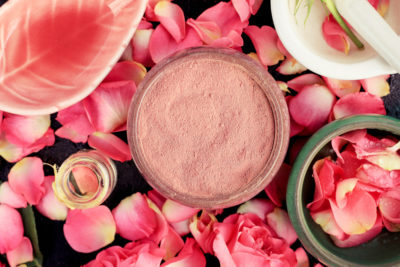 In cosmetics, naturally grayish bentonite clay is often used in various cleansing masks, anti-cellulite and firming wraps, in products for impure skin, to narrow enlarged pores, for more toned skin and to reduce wrinkles. In cosmetics, it is the second raw material on the consumption scale, used to prepare various balms and cosmetics.
In combination with water or hydrolates it can be used as a clay mask. Bentonite clay is capable of strong absorption of oils and thus bacteria, impurities, toxins on the surface of the skin. It helps relieve redness, blemishes on the skin and helps against irritating feeling on the skin.
MEDICINE AND PHARMACY
Bentonite has been prescribed as a massive laxative and is also used as a base for many dermatological formulas. Granular bentonite is being studied for use in infancy in battlefield wounds.
In pharmacy, bentonite plays a very important role in the production of drugs in various forms: from tablets to suspensions. It is also used as an adjuvant.
AGAINST TOXINS IN THE BODY AND THE ENVIRONMENT
Aflatoxin is a type of mold that occurs in some foods and affects the immune system. Aflatoxins can damage the liver and therefore is a bigger possibility of liver cancer. Bentonite clay is proven to absorb harmful toxins and reduce human exposure to chemicals released by vapors from detergents, paints, office equipment, pesticides, building materials, and other substances.
CONSTRUCTION

In contact with fresh bentonite, the mass swells and creates a watertight barrier, which is used in the construction of underground spaces, sewers, water storage tanks, nuclear and other waste.
POTTERY
 A small amount of bentonite is often added to make a clay mixture more plastic. This makes the claymore easily formed, by methods such as throwing on a potter’s wheel and various hand-building techniques. Short clay, such as a porcelain mixture consisting only of kaolinite and feldspar, can be formed only by a limited set of methods such as pressing and molding that do not put the clay under tension. One problem with adding bentonite is that it typically contains minerals that affect the color of the mix.