CHEMICAL COMPOSITION OF BENTONITE
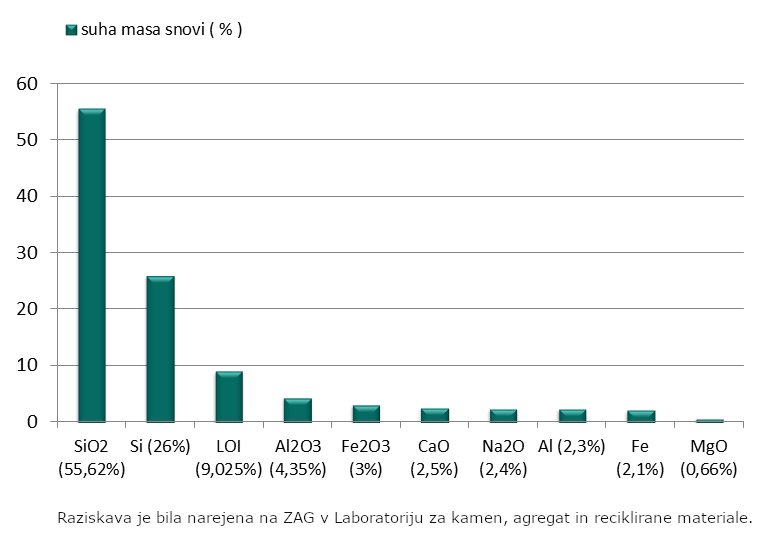 The dry matter content of the sample was determined to be a 93.1 %. The analysis has shown that the clayey part of the sample constitutes 83.9 % of its total dry mass.
The exact composition depends on the location. Sodium, calcium and magnesium cations can be replaced by potassium, iron and other cations. The mineral is often mixed with chlorite, muscovite, illite, kukeit and kaolinite.
Each type of bentonite is named after the corresponding predominant element such as Potassium (K), Sodium (Na), Calcium (Ca) and Aluminum (Al). Experts discuss a number of nomenclature problems with the classification of bentonite clays. Bentonite is usually formed due to the weathering of volcanic ash, most often in the presence of water.
For industrial purposes, there are two main classes of bentonite: Sodium and Calcium bentonite.
Our offer offers both main types of bentonite:
- Sodium bentonite expands when moistened and absorbs several times more dry mass into water. Due to its excellent colloidal properties, it is widely used in drilling mud for oil and gas wells and wells for geotechnical and environmental research. Due to its swelling properties, sodium bentonite is also useful as a sealant, as it provides a self-sealing barrier with low permeability.
- Calcium bentonite is a useful adsorbent of ions in solution as well as in fats and oils. It is the main active ingredient of fuller soil, probably one of the earliest industrial cleaners.